Los Angeles has a complicated relationship with its own image. It is the city that makes films and therefore the city that has spent a century being used as a location for films, often playing itself, occasionally playing New York, and in the case of Blade Runner's vision of 2019 Los Angeles, playing a dystopian future that was simultaneously completely unlike the real city and, in certain specific ways, not entirely inaccurate.
The result is a city where the ordinary infrastructure of daily life — hotel lobbies, train stations, office buildings, street corners — carries an accumulated weight of cinematic history that most cities cannot match. Downtown Los Angeles in particular is essentially a living film set. You can walk between five major filming locations in a single afternoon. Some of them are available to stay in.
This is a guide for people who watch films, remember where they were set, and find this kind of thing worth making a trip for. Which is the correct position to hold.
Location 01The Millennium Biltmore Hotel — Bachelor Party, Beverly Hills Cop, Ghostbusters
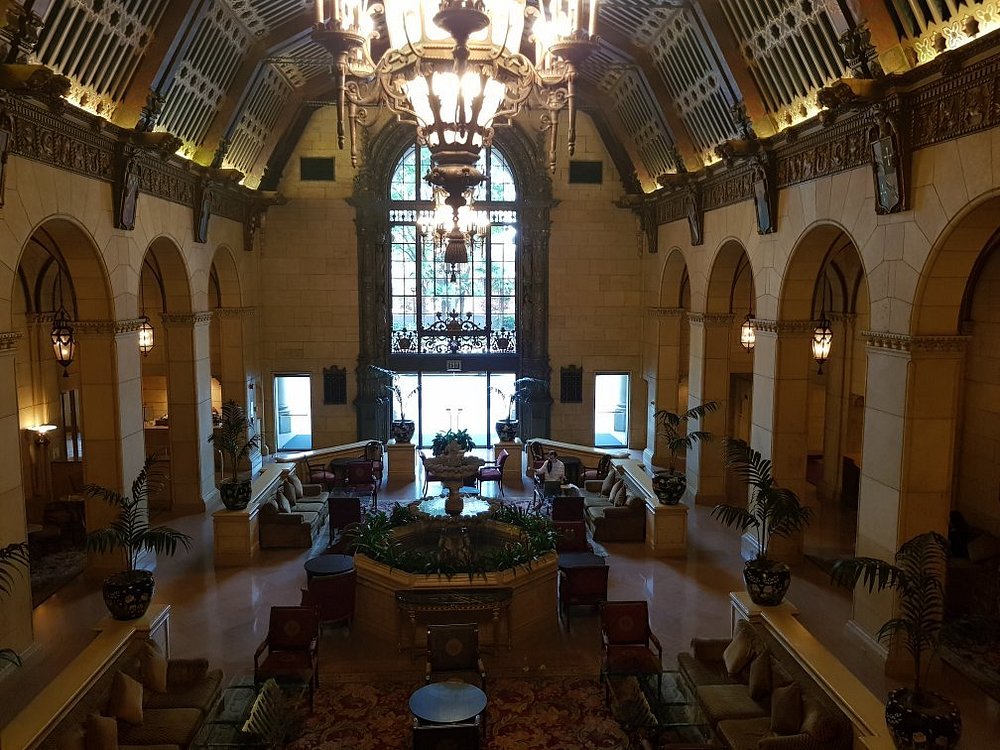
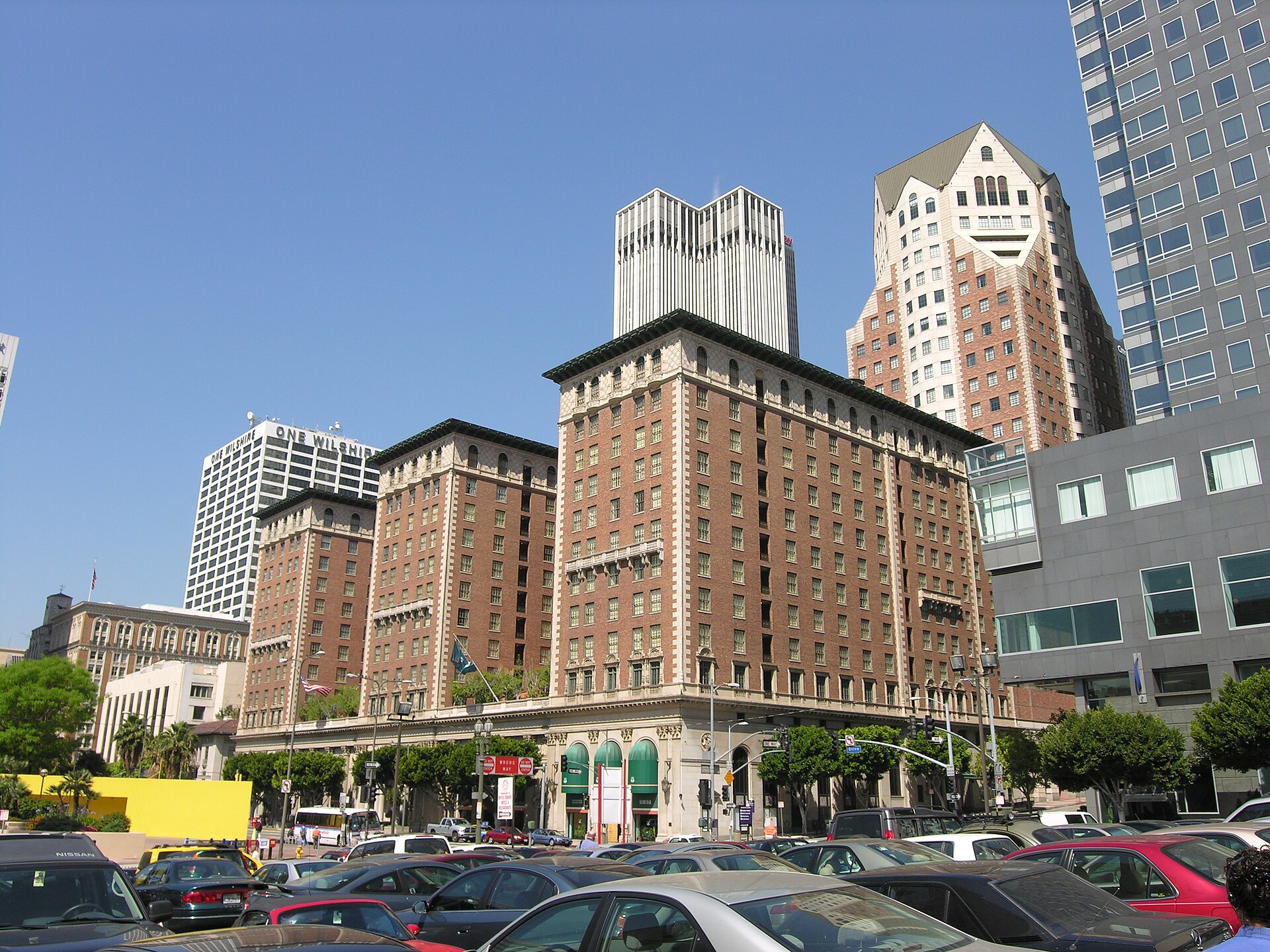
The Millennium Biltmore Hotel at 506 South Grand Avenue in Downtown Los Angeles opened in 1923 as the largest hotel west of the Mississippi and has been appearing in films ever since, largely because it is exactly what a filmmaker imagines when they think "impressive hotel lobby." The interior features murals by Giovanni Smeraldi, who also painted the Vatican and the White House, which gives you some sense of the register the Biltmore operates in.
In 1984 alone, the Biltmore appeared in three separate films. Tom Hanks valet-parked his school bus outside the Olive Street entrance at the beginning of Bachelor Party, in which the hotel served as the location for the entire chaotic pre-wedding sequence. Eddie Murphy bluffed his way in as a guest in Beverly Hills Cop, with the Biltmore playing the Beverly Palms Hotel. And in Ghostbusters, it appeared as the Sedgewick Hotel where the team captured Slimer.
The Crystal Ballroom hosted Molly Ringwald's prom in Pretty in Pink. The art deco pool appeared in Cruel Intentions. The lobby has appeared in Mad Men, Bosch, and somewhere between 200 and 300 other productions depending on which count you use. The Academy Awards were planned here in 1927 and the ceremony was held at the Biltmore eight times.
You can stay here. You can have high tea in the Rendezvous Court, which is the original lobby, and consider the fact that Tom Hanks once drove a school bus past this exact spot on a Tuesday in 1984. The Biltmore is a functioning luxury hotel and one of the most film-saturated buildings in America. Both things are true simultaneously.
📍 Book it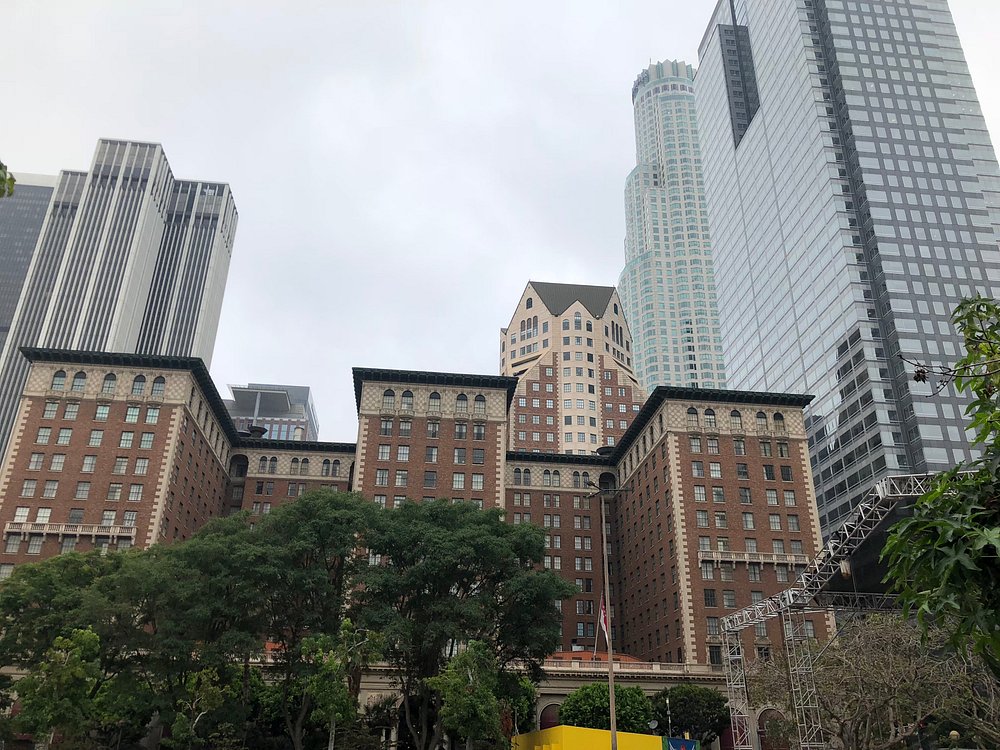
Location 02The Bradbury Building — Blade Runner, Chinatown, 500 Days of Summer
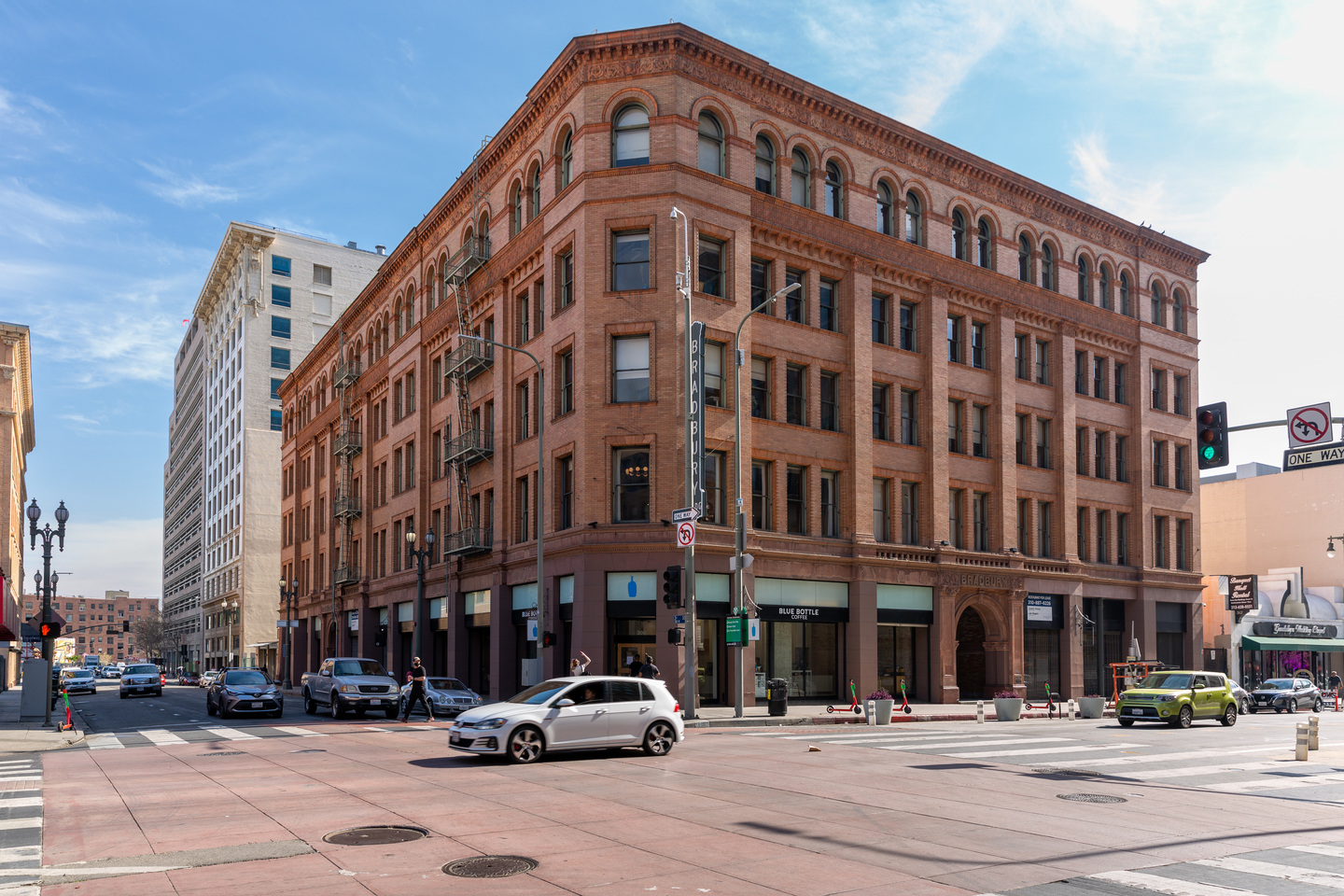
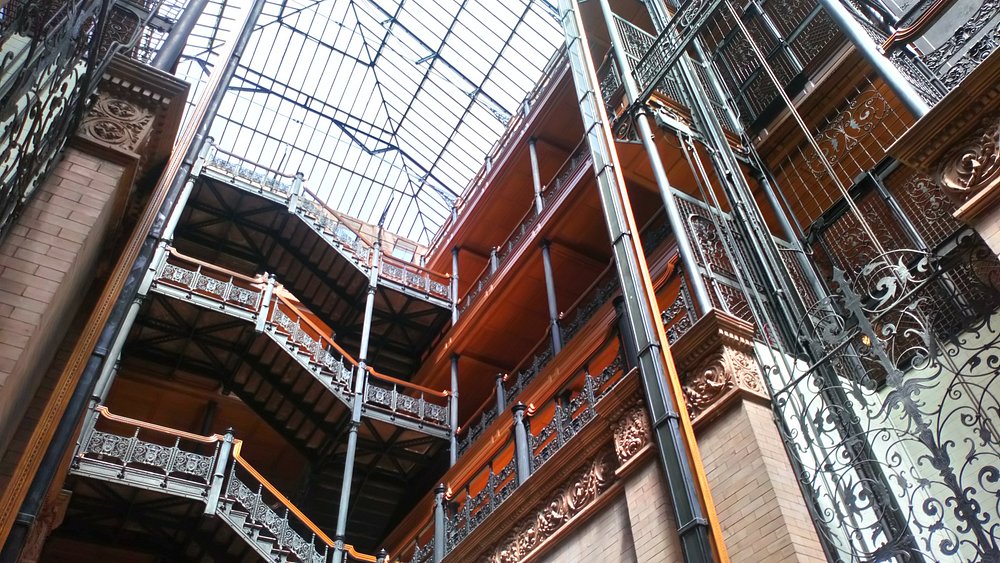
The Bradbury Building at 304 South Broadway is the most beautiful interior in Los Angeles and one of the most filmed buildings in America. Built in 1893, it features a five-storey light-filled atrium with ornate cast-iron railings, glazed yellow brick walls, open cage elevators and a skylight roof that fills the entire space with California light. It is extraordinary in person in a way that photographs do not quite capture.
In Blade Runner (1982), it served as the deteriorating apartment building where J.F. Sebastian lived in the film's version of 2019 Los Angeles, shot to look dark, damp and overcrowded. Ridley Scott's production design team dressed it to suggest a future of urban decay, which required some effort given that the Bradbury in reality is one of the most architecturally pristine Victorian commercial buildings in existence. The contrast between the building as it appears in Blade Runner and the building as it actually is remains one of the more striking examples of what film production can do to a space.
It also appeared in Chinatown (1974), 500 Days of Summer (2009), The Artist (2011), Lethal Weapon 4 (1998) and dozens of other productions. The ground floor is publicly accessible during business hours. The upper floors are occupied by Los Angeles courts offices and are not accessible to the public. The ground floor atrium is enough. Go between 10am and 3pm for the best light through the skylight.
Practical note: The Bradbury Building is at 304 South Broadway, one block from Grand Central Market and two blocks from the Millennium Biltmore. You can cover both in a single Downtown morning. The Apple store now occupies the former Broadway department store building directly opposite, which is either an interesting juxtaposition or an unsettling one.
Location 03Union Station — Blade Runner, Catch Me If You Can, Chinatown
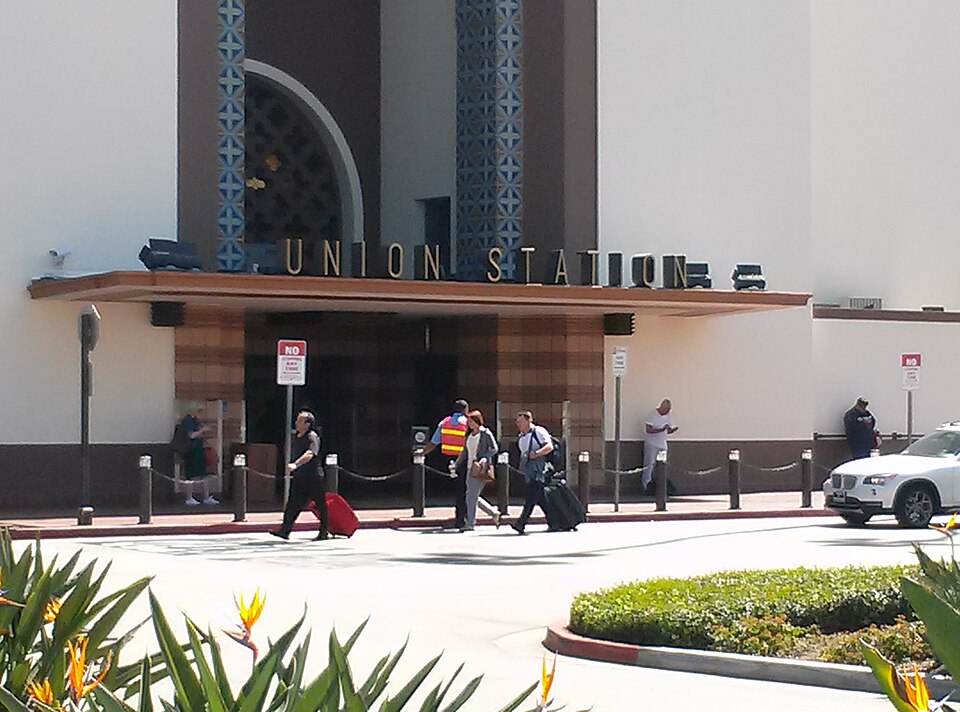
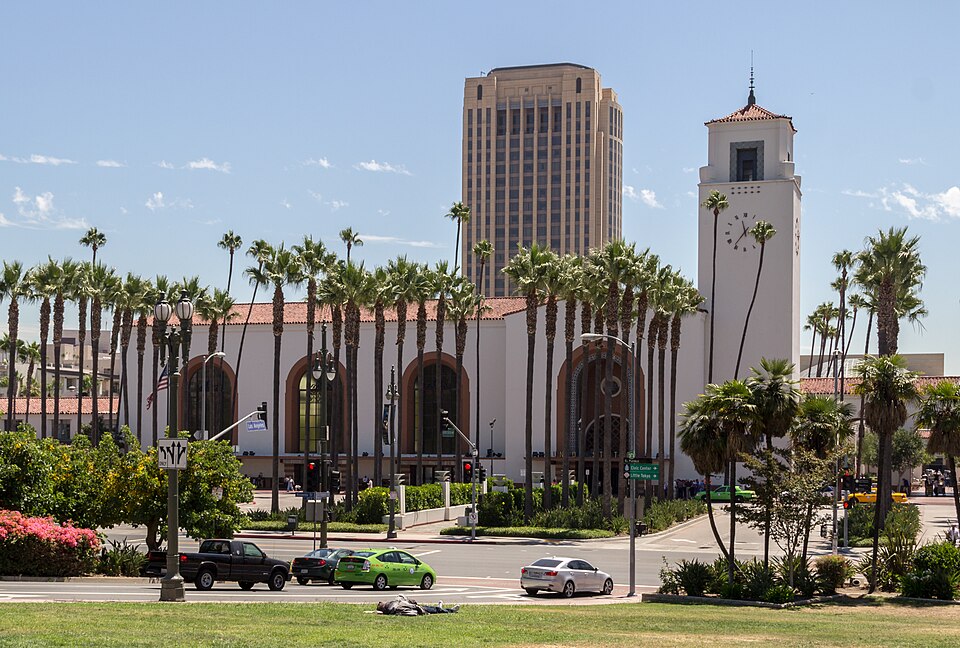
Los Angeles Union Station, opened in 1939, is the last of the great American railway stations — a building that combines Spanish Colonial Revival, Mission Revival and Streamline Moderne architecture in a way that should not work and absolutely does. The marble floors, the cavernous waiting hall, the wooden benches, the garden courtyards — it is a building that was designed to feel significant, and it still does.
It appears in Blade Runner as part of the film's vision of future Los Angeles. It was used in Chinatown, Catch Me If You Can, The Dark Knight Rises and many others. It is also, still, an operational railway station. You can arrive at Union Station on Amtrak or the Metro, walk into one of the great American public interiors, and then walk to the Bradbury Building and the Biltmore in under fifteen minutes. This is an extremely efficient use of a morning.
Location 04Collateral's Los Angeles — Downtown and Beyond
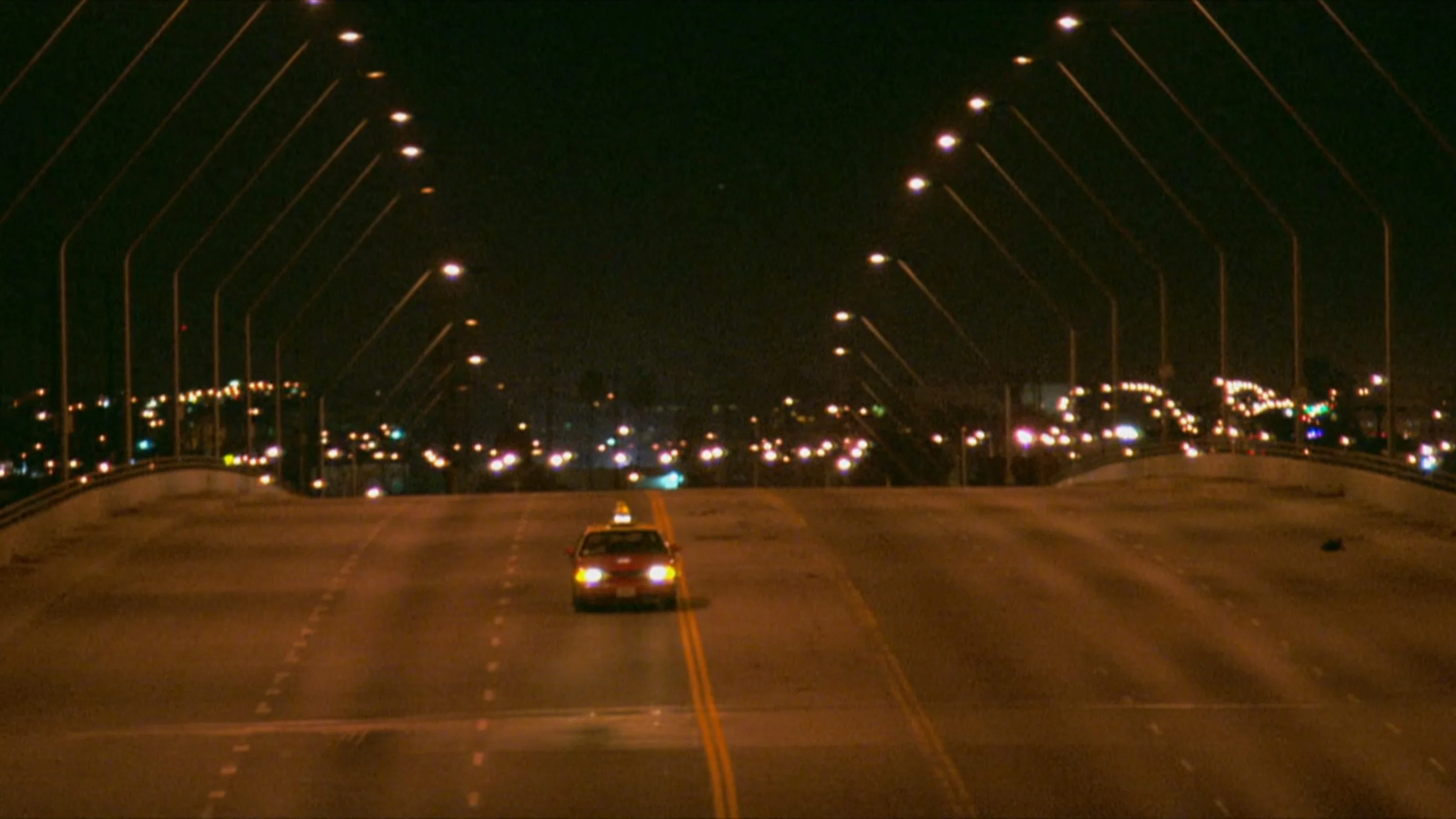
Michael Mann's Collateral (2004) is one of the definitive Los Angeles films — a single-night story about a hitman (Tom Cruise) and the cab driver he takes hostage (Jamie Foxx), shot across the city using early digital cameras that gave the footage a particular grain and immediacy that made Los Angeles look simultaneously beautiful and threatening. Mann was specifically interested in the nocturnal city, the LA that exists after midnight when the freeways are empty and the downtown streets are quiet.
The film used real Los Angeles locations throughout — the downtown streets, the Korean business district, the El Rey Theatre on Wilshire Boulevard, Farmers Market, the harbour. The jazz club scenes were filmed at a real jazz venue. The Blue Line Metro sequence was shot on the actual Blue Line. Mann's approach to the city was documentary-adjacent, and the result is that Collateral functions as one of the better visual records of early 2000s Los Angeles.
A Collateral location tour of Los Angeles is not a conventional tourist itinerary, but driving the downtown streets at night — particularly around 5th and 6th Street where much of the film's early action takes place — gives you the film's particular version of the city in a way that is genuinely evocative. The city at that hour looks like the film.
Location 05Predator 2 — Downtown Los Angeles as Urban Jungle
Predator 2 (1990) is set in a fictional near-future Los Angeles of 1997 that the film imagines as a war zone of gang conflicts and brutal heat. Danny Glover plays a detective navigating this environment while also dealing with an invisible alien hunter picking off criminals. It is an extremely specific film that has accumulated a devoted following precisely because of how earnestly it commits to its own premise.
The film used Downtown Los Angeles extensively, particularly the area around the Bradbury Building, Grand Central Market and the surrounding streets, which in 1990 looked considerably more run-down than they do today. The downtown renovation and gentrification of the 2000s and 2010s transformed much of the area. Walking through today's Downtown — the restaurants, the arts district, the renovated buildings — while knowing what it looked like in Predator 2 is itself a kind of urban history lesson.
The Predator's lair sequences were filmed in a slaughterhouse and cold storage facility on the edge of Downtown. The location is long gone. The general atmosphere of the film's version of LA, however, can be approximated by visiting the Bradbury Building and Grand Central Market and then looking at the 1990 production stills and noting the difference.
Your Downtown Los Angeles Film Day
- Start at Union Station — arrive by Metro or Amtrak, walk the main hall, note the Blade Runner and Chinatown context.
- Walk to Grand Central Market (317 South Broadway) — open since 1917, still the best place for lunch in Downtown.
- The Bradbury Building (304 South Broadway) — ground floor atrium open during business hours. Go between 10am–3pm for best light.
- The Millennium Biltmore (506 South Grand Avenue) — have coffee in the Rendezvous Court. Consider Bachelor Party. Both are reasonable activities simultaneously.
- Evening — drive the Collateral route through Downtown after dark. 5th and 6th Street. The freeway towards the harbour. The city looks like the film.
- Fly into LAX — 20–30 minutes from Downtown depending on traffic, which in Los Angeles means anything from 20 to 90 minutes.
Staying in Los Angeles
✈️ Getting there & staying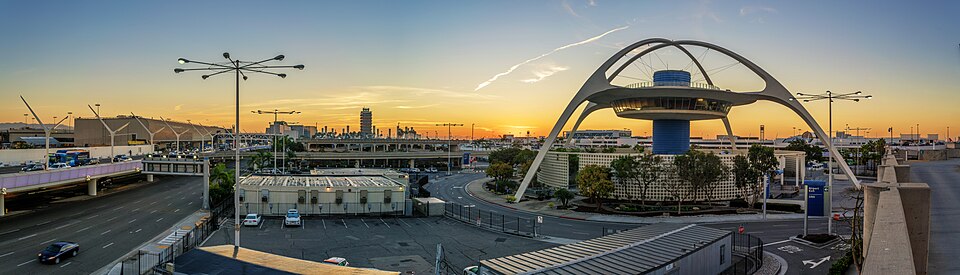
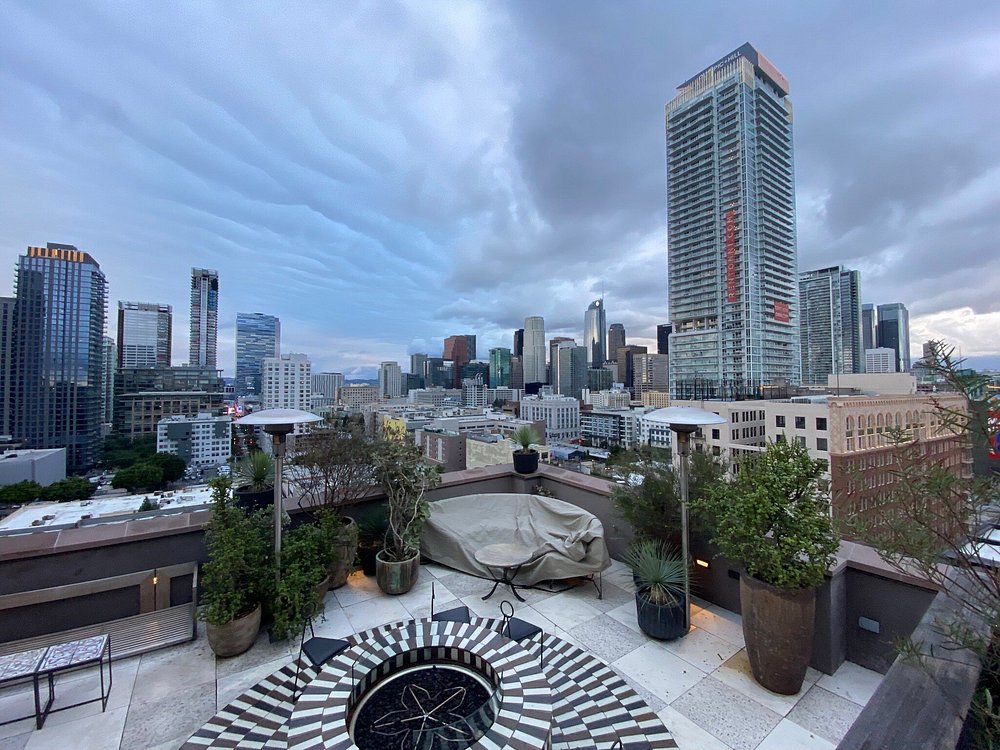
The obvious answer, if budget allows, is to stay at the Biltmore itself. You are then on site for three separate classic film locations (Bachelor Party, Beverly Hills Cop, Ghostbusters) and within walking distance of the Bradbury Building and Union Station. The Biltmore's rates are in the luxury tier but not unreasonable for what it is.
For a broader base, Downtown Los Angeles has expanded considerably as a hotel destination over the past decade, with a range of options from the historic Ace Hotel in the United Artists Theatre Building to more conventional mid-range accommodation along South Figueroa. Hollywood and Mid-Wilshire are also viable bases that put you closer to the Collateral locations on Wilshire Boulevard and the broader west-side of the city.
Los Angeles rewards the visitor who has specific destinations in mind. The city's scale and driving culture mean that a vague plan to "explore LA" is less satisfying than a concrete list of places you want to stand in because of what happened there on film. The Bradbury Building atrium at midday. The Biltmore lobby at six in the evening. Downtown at midnight with the Collateral soundtrack. These are specific experiences that the city delivers and that no other city can.